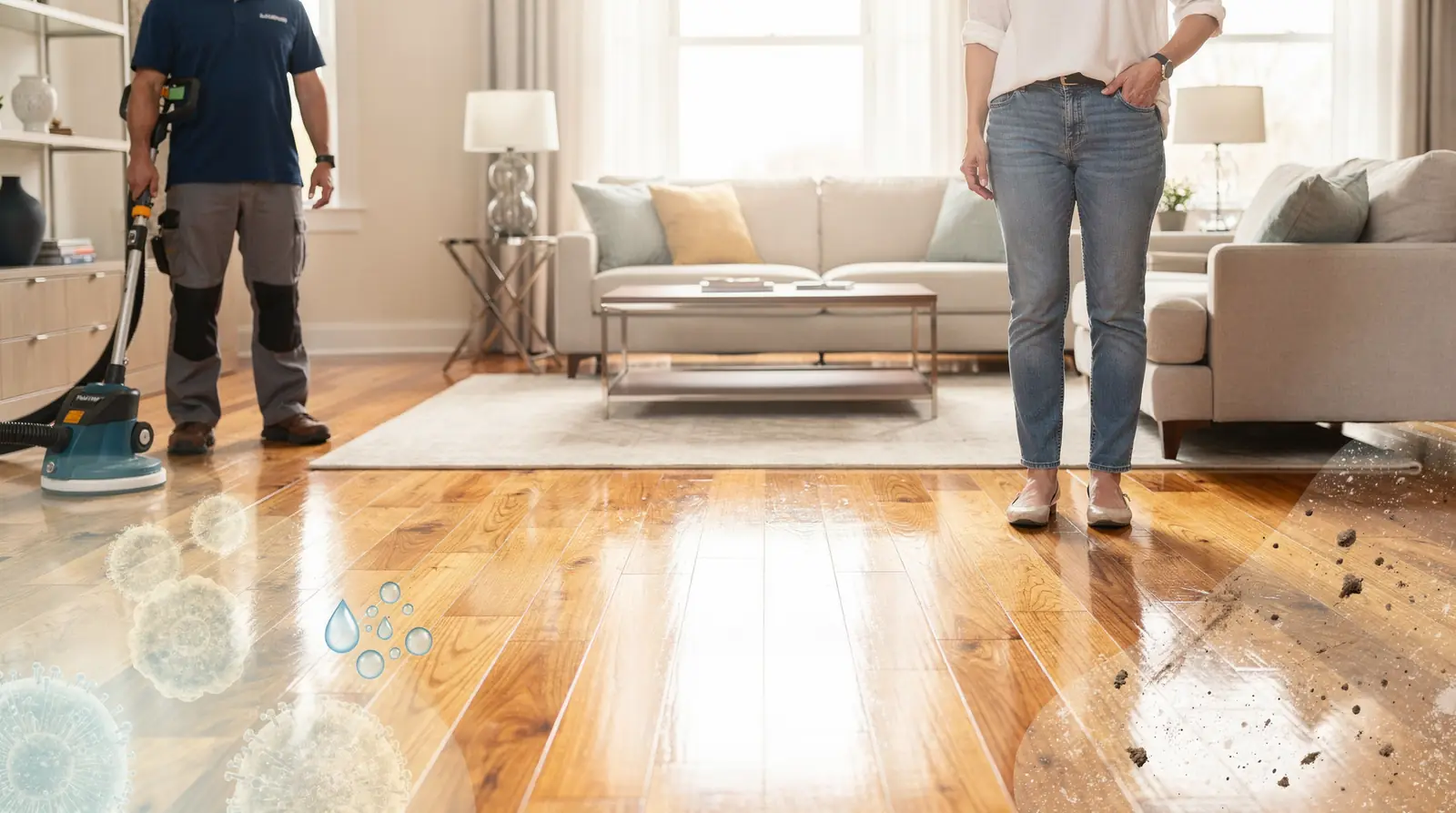
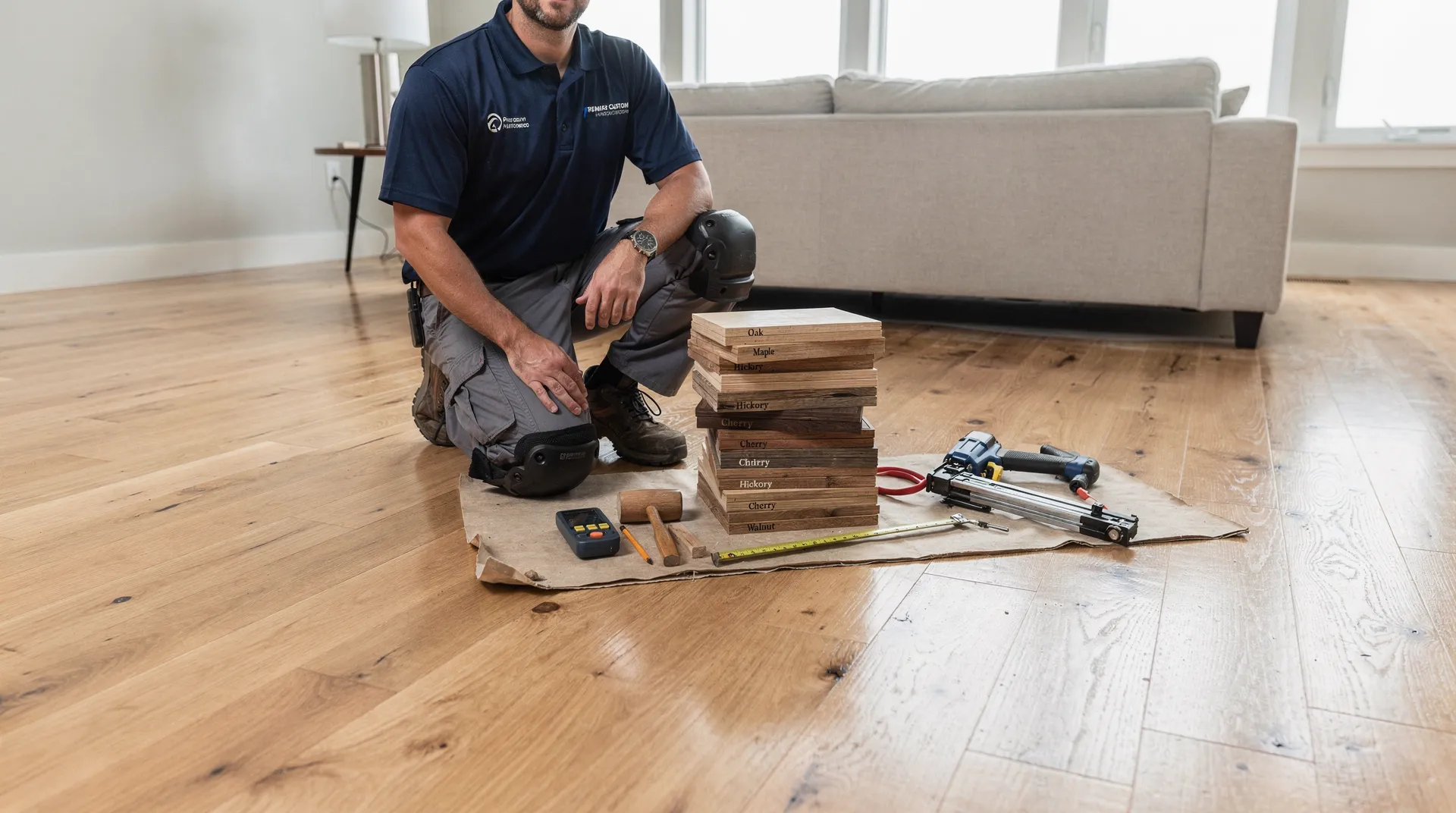
Types of Hardwood Flooring: Which Is Best for You?
Hardwood flooring options include solid hardwood, engineered wood, and wood-look alternatives like laminate, vinyl, and bamboo, each suited to different rooms and budgets. Premier Custom Hardwood Flooring installs solid wood floors using BONA GREENGUARD Gold Certified products, backed by over 40 years of craftsmanship serving homeowners across new construction and occupied homes.
Key Takeaways
- Hardwood flooring comes in multiple structures, profile types, and finishes to suit different area requirements.
- Solid hardwood and engineered wood represent two distinct construction types with different performance characteristics.
- Durability, wood type selection, and installation method significantly impact how hardwood floors perform over time.
- Wood flooring materials offer diverse appearances while requiring consideration of cost, maintenance, and finishing options.
What Are the Main Types of Hardwood Flooring?
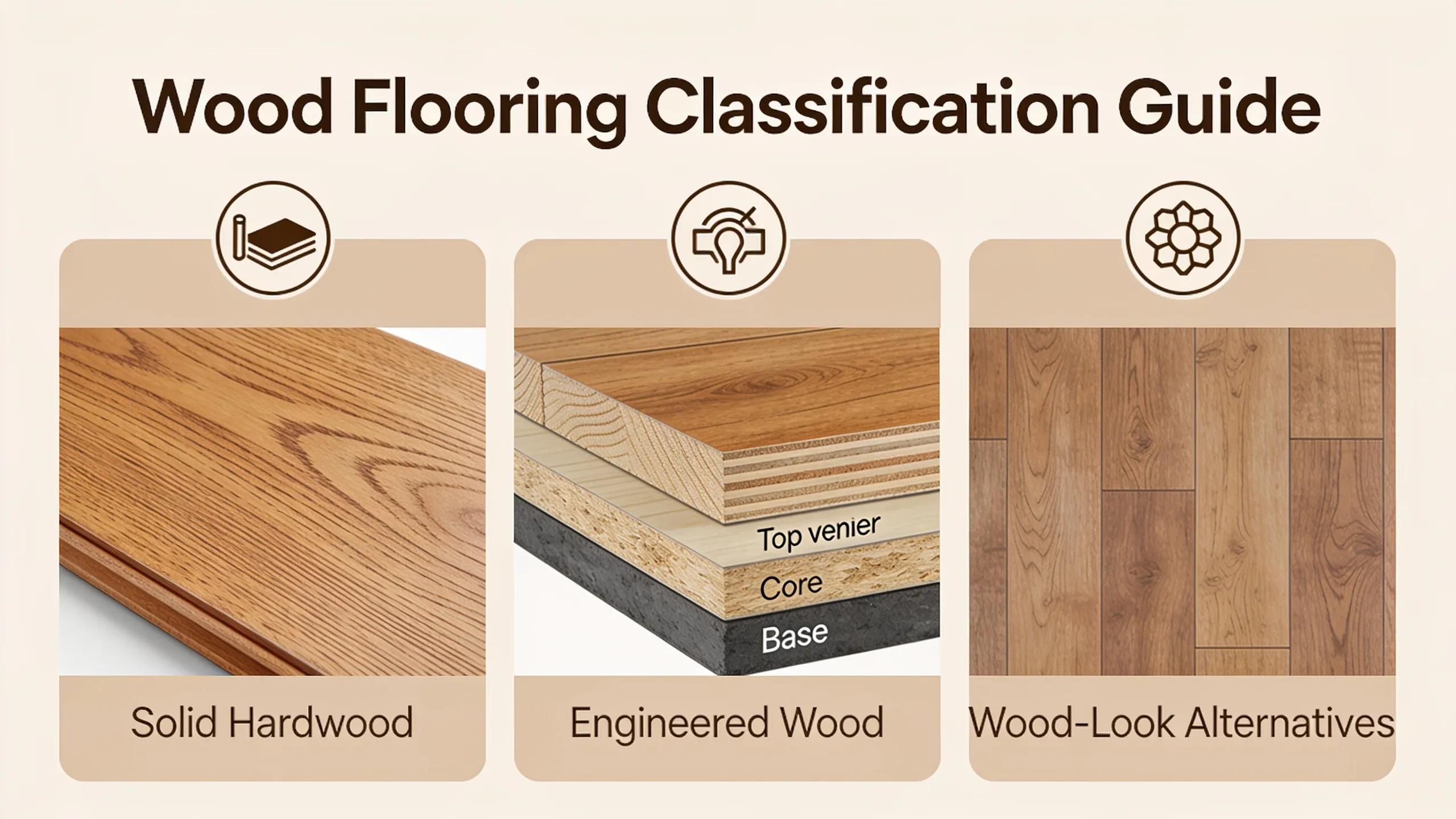
Three broad categories define the types of hardwood flooring available to homeowners today: solid hardwood, engineered wood, and wood-look alternatives such as laminate, vinyl, and bamboo. Each category performs differently underfoot, ages differently over decades, and suits different rooms in a house. A finished basement calls for different construction than a sunlit living room. Picking correctly the first time avoids costly do-overs.
Durability matters as much as looks. Wood species, board construction, and the installation method chosen all determine how a floor holds up to daily traffic, moisture, and furniture. Appearance alone rarely tells the full story of long-term performance.
| Category | Construction | Best Suited For |
|---|---|---|
| Solid hardwood | Milled from a single plank of timber | Above-grade rooms, long-term refinishing |
| Engineered wood | Layered wood veneer over plywood core | Basements, kitchens, areas with moisture concerns |
| Wood-look alternatives | Laminate, vinyl, or bamboo composites | Budget-conscious or high-moisture spaces |
Which type of hardwood floor lasts the longest?
Solid hardwood typically offers the longest lifespan because its full-depth plank allows for multiple sandings and refinishings over the years. Engineered wood holds up well too, particularly in spaces prone to humidity swings. Its veneer layer limits how many times it can be refinished.
Premier Custom Hardwood Flooring has guided homeowners through these decisions for more than 40 years, handling installation, refinishing, and custom trim work with the same disciplined craftsmanship on every job. Full-service solutions extend to both new construction and already-occupied homes. Families don’t have to choose between a fresh build and an existing residence that simply needs updated floors. That range of experience helps homeowners match species and construction to the realities of their specific space.
What Makes Solid Hardwood Different From Engineered?
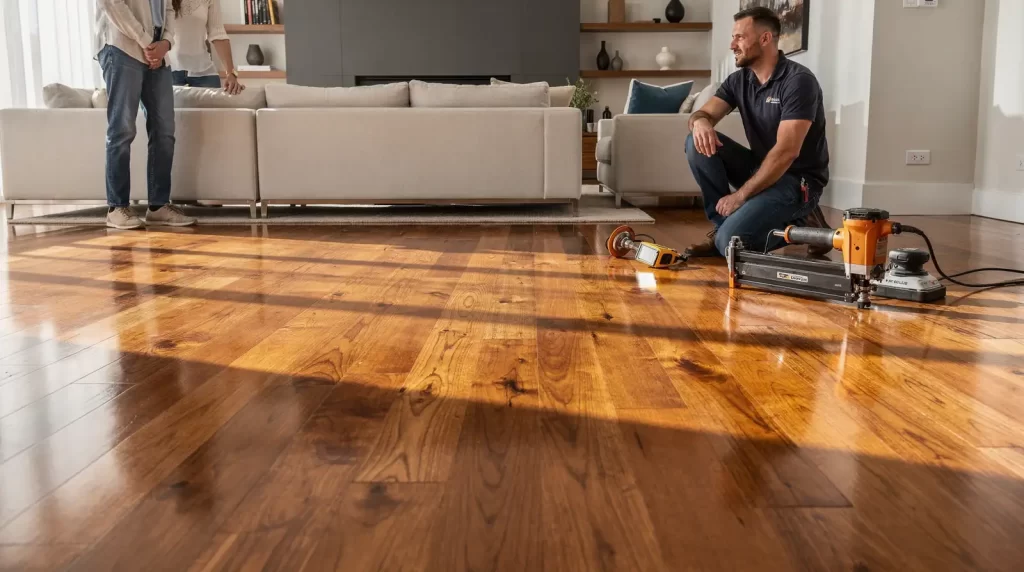
Solid hardwood floors come from a single, continuous piece of timber, milled to a thickness between 5/8 and 3/4 inch. Engineered flooring, by contrast, layers a hardwood veneer over a composite or plywood base. That distinction affects everything from installation location to how many times a floor accepts refinishing over its lifetime. Understanding the different types of hardwood flooring starts with grasping this core construction difference.
Is Solid Hardwood Worth the Extra Investment?
For many homeowners, yes. Solid hardwood earns its reputation for authenticity, longevity, and durability that alternative flooring types struggle to match. Sourcing and finish quality vary between suppliers, so vetting the origin and protective coating matters before installation begins. A well-installed solid floor can outlast the home’s other finishes by decades.
Hardwood flooring types generally fall into a few structural categories:
- Genuine solid hardwood — one piece of timber, top to bottom
- Engineered hardwood — a real wood veneer bonded over layered composite
- Wood-composite or synthetic options — materials designed to mimic hardwood’s look without solid wood content
Each category serves different needs. A busy household with radiant heating or a below-grade basement often does better with engineered construction. A traditional living or dining room benefits from solid wood’s classic character and refinishing potential.
Premier Custom Hardwood Flooring installs brand-new solid wood floors for homeowners planning ground-up remodeling projects. Restores older existing floors with the same craftsmanship standard applied to new work. That dual capability matters for buyers of older homes who inherit tired hardwood. Want it brought back rather than replaced. Whether the goal involves a fresh solid installation or a careful restoration, the construction method chosen at the outset shapes maintenance, cost, and how the floor performs for years to come.
Which Wood Species and Finishes Fit Your Home?
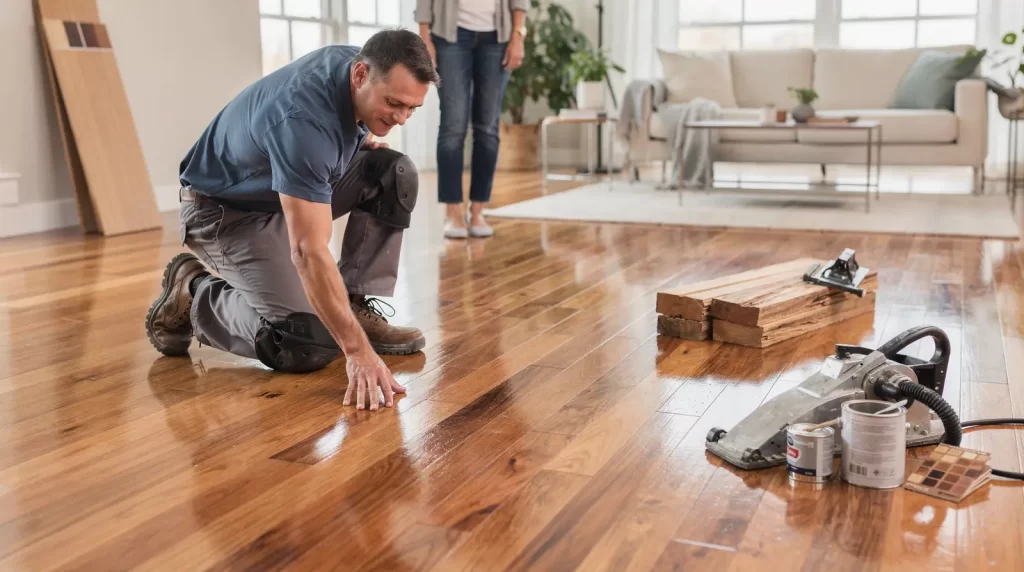
Species and finish quality determine how a floor performs for decades, not just how it looks on installation day. Two homeowners can install the same oak plank. Get very different results depending on lumber sourcing and the protective topcoat applied. Origin and finish quality matter as much as the wood species itself when comparing the various types of hardwood flooring available for a home.
Solid hardwood quality depends heavily on where the lumber was harvested and how it was treated afterward. A well-sourced board resists warping and wear far better than a poorly graded one, even within the same species. Finish choice plays an equally large role in long-term durability.
What finish options work best for a busy household?
Premier Custom Hardwood Flooring provides a full range of stains and finishes alongside custom installation, sanding and refinishing, and moulding and trim work. Homeowners get to choose color depth and sheen level while relying on proven application methods. Full-service interior painting rounds out the offering for whole-room updates.
The company applies GREENGUARD-certified waterborne finishes, which support cleaner indoor air during and after the project. A dust containment system captures airborne particles throughout sanding, protecting furniture and household members alike. That combination matters for families with allergies or young children in the home.
Selecting a qualified installer matters as much as picking the species. As a Bona Certified Craftsman, the team trains and certifies on the complete Bona finishing system. Common pairings include:
- Red oak with a satin waterborne topcoat for classic living spaces
- Maple with a clear finish for a lighter, modern look
- Hickory with a matte sheen for high-traffic hallways
Matching species and finish to lifestyle prevents costly refinishing sooner than expected.
How Do Layout, Trim, and Special Installs Vary?
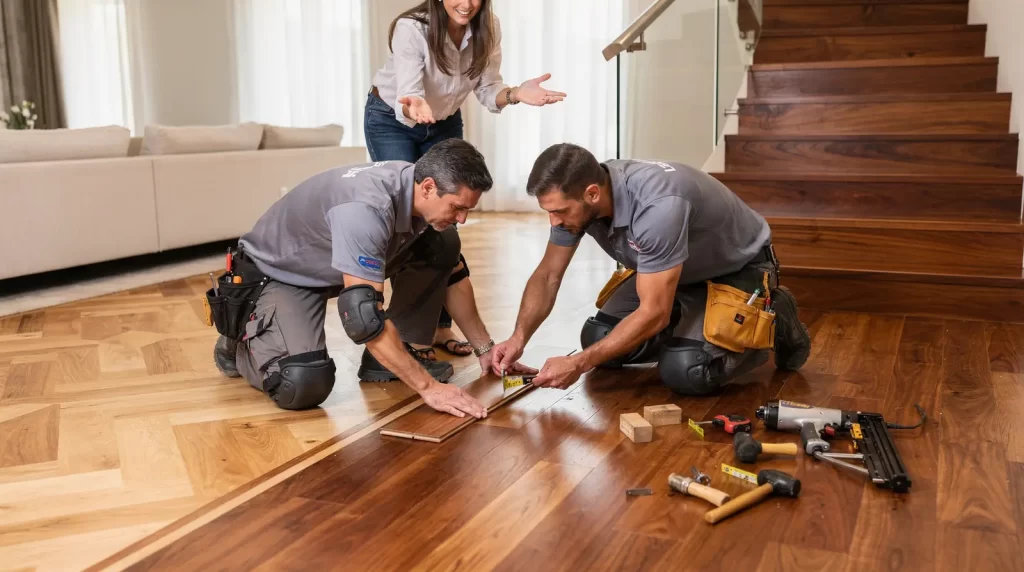
Layout choices, trim details, and specialty installs shift dramatically depending on the room, the wood, and the homeowner’s goals. Premier Custom Hardwood Flooring handles the full range of these variations, from a single hallway repair to a whole-house transformation. Understanding how the types of hardwood flooring projects differ helps homeowners set realistic expectations before demolition ever starts.
Beyond a standard plank floor, several project types call for specialized skill:
- Stair systems, which require precise tread and riser fitting for safety and durability
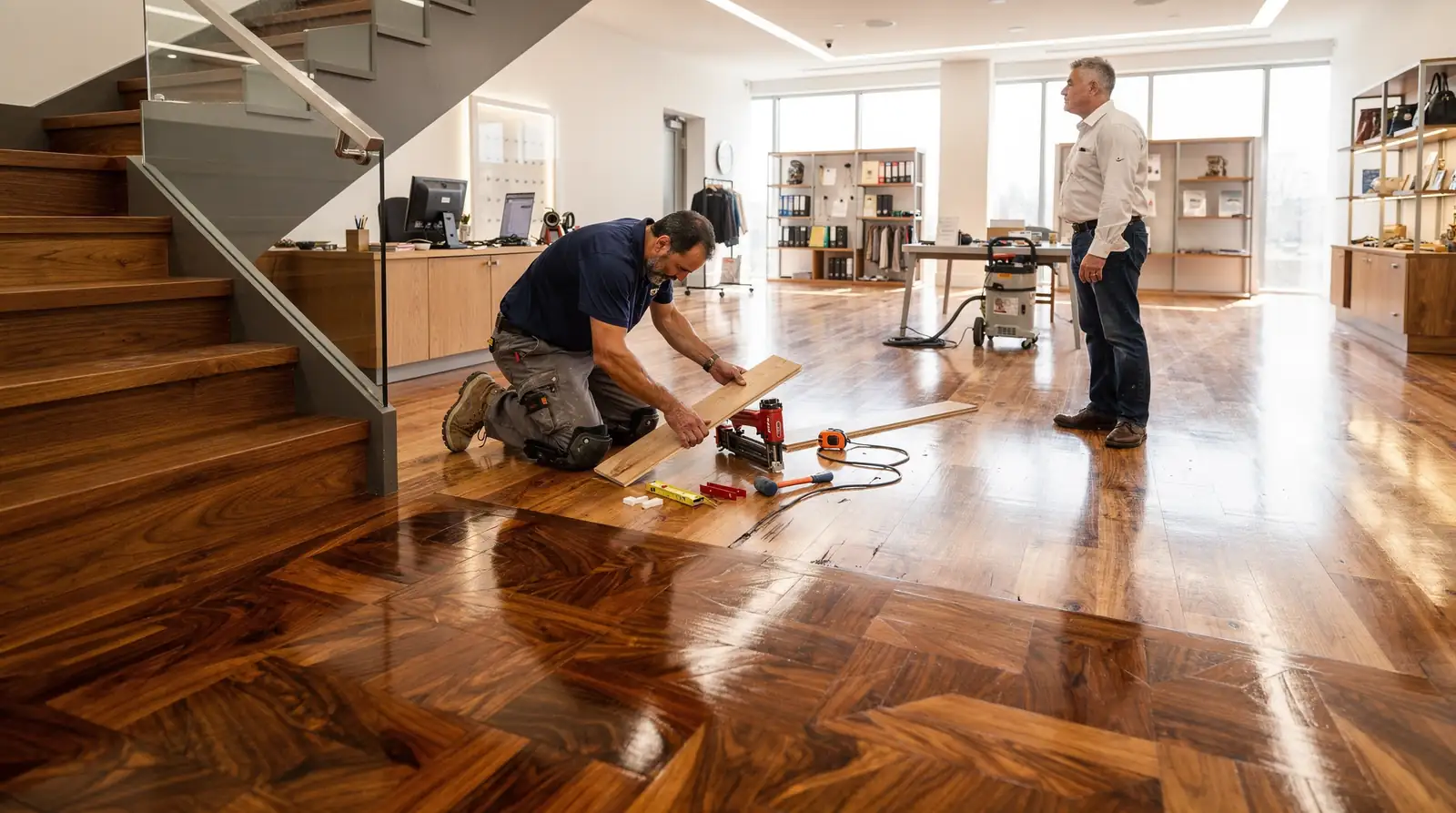
- Parquet layouts, built from geometric wood patterns rather than uniform planks
- Exotic wood species, chosen for unique grain and color not found in domestic lumber
- Detailed trim work, including baseboards, transitions, and custom moulding
Each of these demands different tools, timing, and expertise than a basic room install.
Can new flooring match an existing, discontinued style?
Matching an older floor to new materials is one of the trickiest parts of a remodel. The crew studies the existing plank width, species, and stain to find or blend a compatible match, so new sections tie into the original space without an obvious seam.
What happens during the actual installation phase?
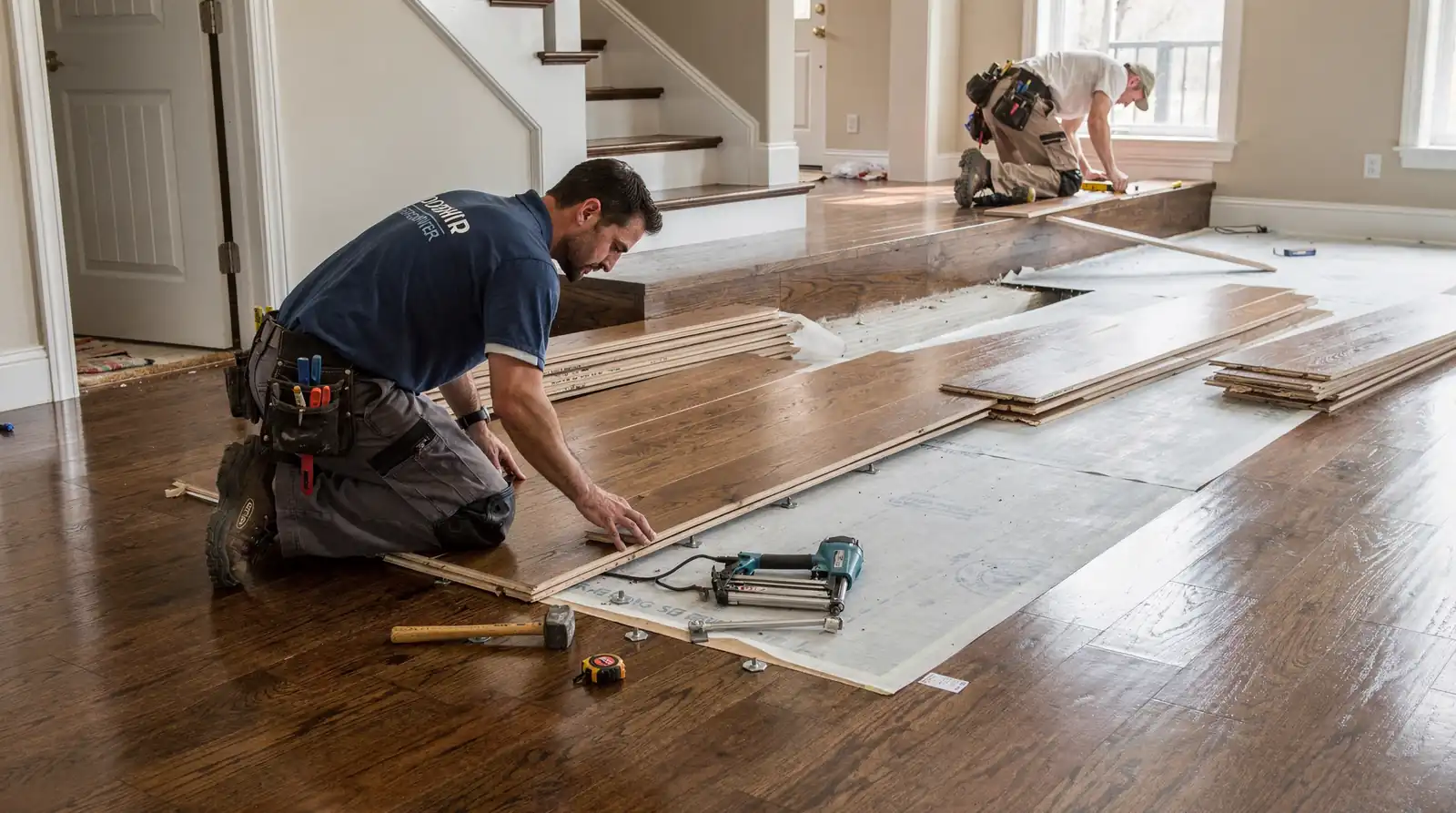
Every project starts with demolition and proper prep work, followed by a vapor barrier to protect against moisture damage. Fasteners go in at approved spacing for long-term stability. Cuts around door casings and jambs are made with precision rather than rough approximation. Furniture gets moved and protected throughout the process.
For homeowners wanting a fully finished result, interior painting rounds out the offering. Pairing fresh walls with new floors gives a room a cohesive, move-in-ready appearance in a single project timeline.
How Do You Choose the Right Type?
Budget, room use, and timeline settle most decisions about the types of hardwood flooring available to homeowners. Material costs run between $4 and $15 per square foot, with price shifting based on wood thickness, species, and grade. A kitchen remodel and a formal dining room rarely call for the same product. Matching the floor to the room comes first.
What determines the cost of a hardwood floor?
Thickness, species, and grade drive the price range most directly. Thicker planks and premium species sit at the higher end near $15 per square foot. Thinner or lower-grade options land closer to $4. Homeowners weighing several rooms should budget with this full range in mind rather than a single number.
Premier Custom Hardwood Flooring simplifies the decision through a structured process:
- Consultation – A free in-home visit produces accurate measurements and a clear picture of the space.
- Pre-installation – Site prep and material selection happen before any work begins.
- Installation – Crews install the flooring with attention to fit, finish, and cleanliness.
- Post-installation – Maintenance guidance and ongoing support follow the finished job.
How does scheduling a consultation work?
Homeowners reach the team Monday through Saturday, 7 a.m. to 7 p.m., for a free estimate. No obligation comes attached to that first conversation. Payment flexibility—check, cash, credit card, or debit—removes another barrier once a decision gets made.
Choosing the right species and construction matters less than choosing the right partner to guide that choice. A consultation grounded in real measurements, not guesswork, keeps a remodeling budget honest from day one.
Selecting the right hardwood flooring type requires understanding how species, finishes, and installation methods align with your home’s aesthetic and functional demands. Whether you choose solid hardwood for its timeless appeal, engineered options for stability in challenging environments, or exotic woods for distinctive character, each type delivers lasting beauty when installed with precision and maintained with care. Your choice ultimately reflects both your lifestyle. Your commitment to quality—a decision best made with guidance from experienced craftsmen who understand the nuances of each material. Can ensure flawless execution for years of enduring performance.
FAQ
What are the three main types of hardwood flooring?
Solid hardwood, engineered wood, and wood-look alternatives like laminate, vinyl, and bamboo make up the three categories. Each performs differently underfoot and suits different rooms based on moisture exposure and traffic.
What is the difference between solid and engineered hardwood?
Solid hardwood is milled from a single continuous piece of timber, 5/8 to 3/4 inch thick. Engineered wood layers a hardwood veneer over a plywood or composite base. This affects installation location and refinishing potential.
Which hardwood flooring type works best for basements or kitchens?
Engineered wood suits basements, kitchens, and other areas with moisture concerns due to its layered plywood core construction. Solid hardwood performs best in above-grade rooms where long-term refinishing matters most.
Conclusion
Solid and engineered hardwood remain the strongest choices for homeowners who want a floor that performs as well as it looks. Solid hardwood delivers unmatched longevity, with enough depth in every plank to withstand repeated sanding and refinishing for decades. Engineered wood holds its own where moisture and temperature swings rule out solid planks, offering the same authentic wood surface with a construction built for basements, kitchens, and homes with radiant heat. Laminate, vinyl, and other wood-look alternatives may suit a tight budget or a short-term fix, but neither matches the durability, refinishing potential, or resale value that real wood provides.
For homeowners weighing the types of hardwood flooring available, solid and engineered wood are worth the added investment. Premier Custom Hardwood Flooring’s 40-plus years of installation, refinishing, and trim expertise help match the right species and construction to each home, so the floor performs well long after the project wraps.