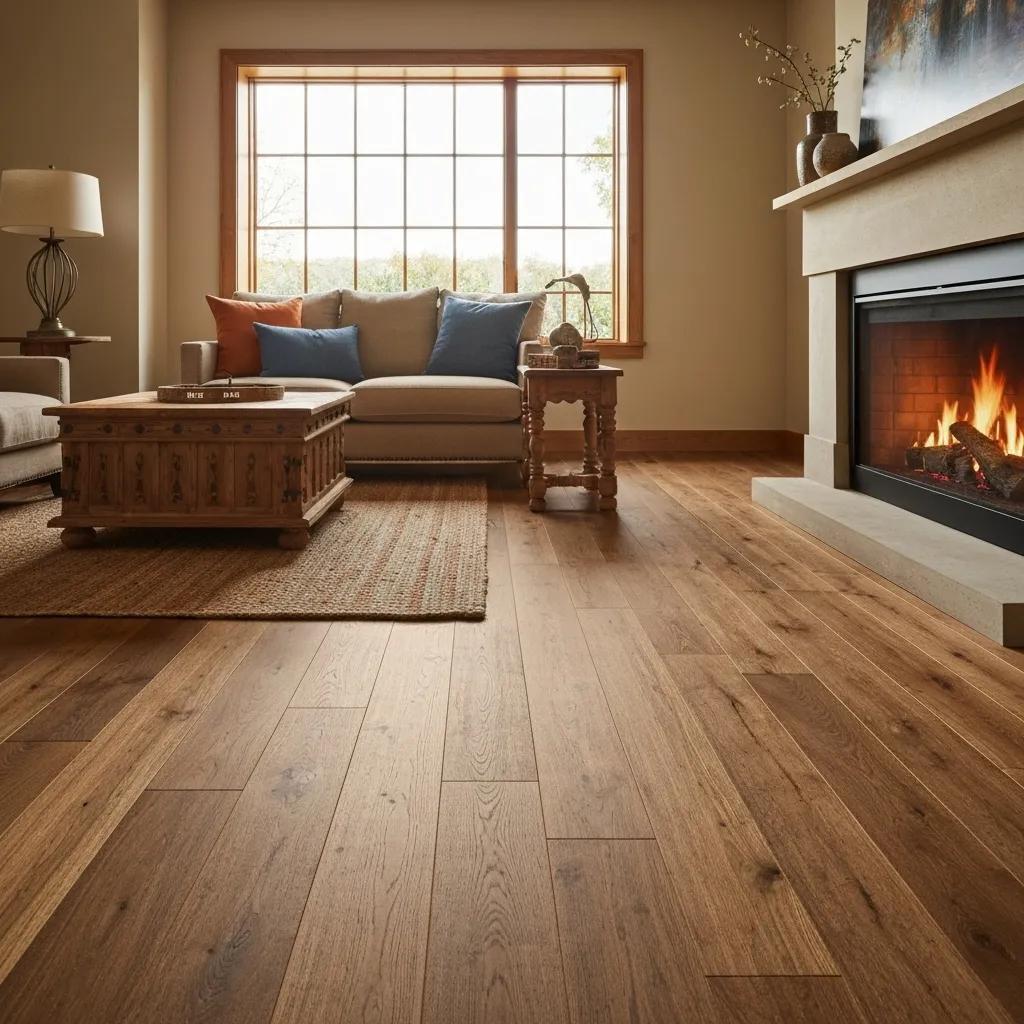
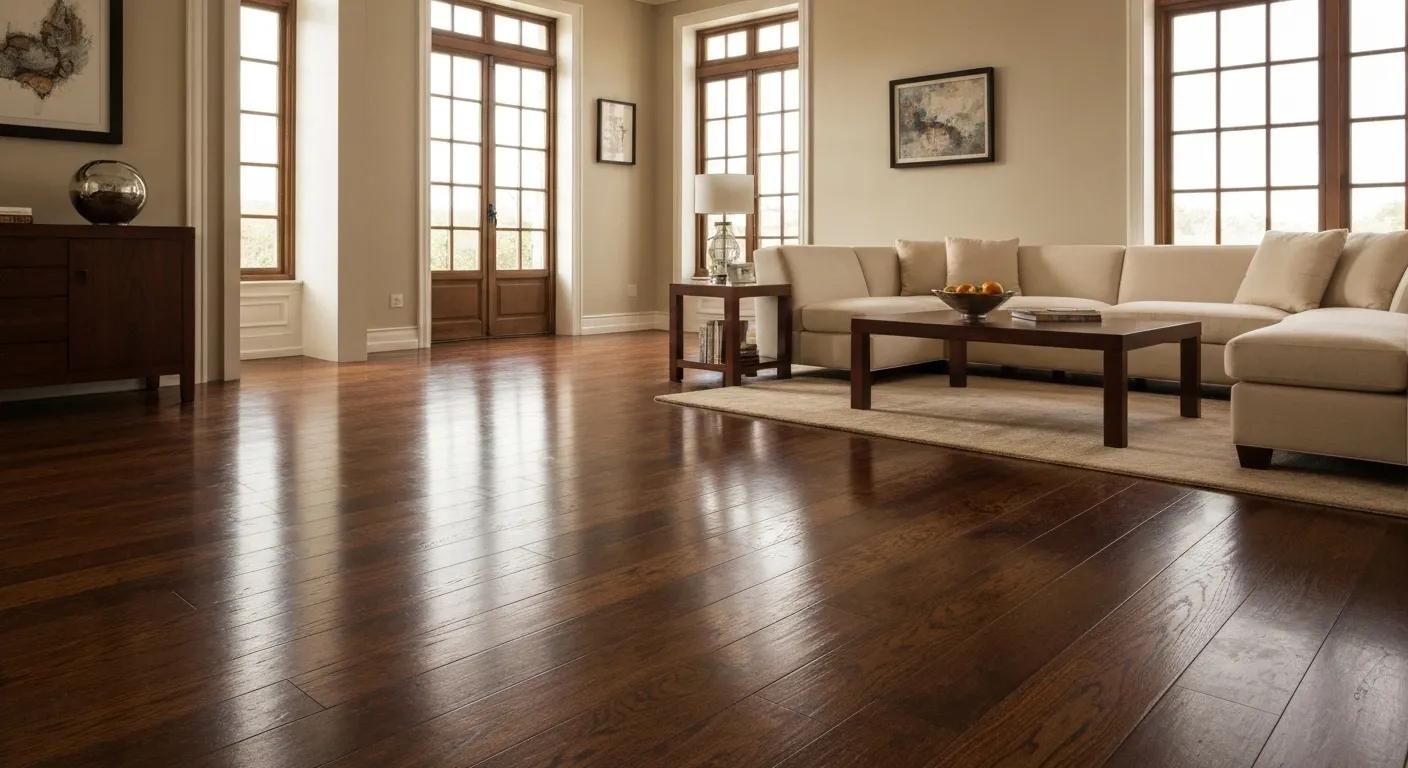
Hardwood Flooring vs Carpet Comparison
By Premier Custom Hardwood Flooring Editorial Team · Updated 2026-07-25
Hardwood flooring outperforms carpet in durability, resale value, and cleanliness. Hardwood can last 20-30 years or more when properly maintained. Carpet typically needs replacement every 5-10 years, and carpet also traps allergens along the way. Premier Custom Hardwood Flooring, a Bona Certified Craftsman with over 40 years of experience, delivers Hardwood Flooring Installation suited for kitchens, bathrooms, and every high-traffic room carpet struggles to serve.
Key Takeaways
- Hardwood floors add measurable resale value to properties compared to carpet flooring options.
- Hardwood flooring reduces allergens and maintains better indoor air quality than carpeted surfaces.
- Wood floors last significantly longer than carpet, which shows dirt and requires frequent replacement.
- Hardwood flooring lowers your home’s carbon footprint while beautifying interior spaces simultaneously.
Why Compare Hardwood Flooring vs Carpet Before You Remodel?
Skipping a side-by-side review before a remodel often leads to costly regrets. A careful hardwood flooring vs carpet comparison reveals which material actually fits a homeowner’s budget, lifestyle, and long-term plans. The debate between these two flooring types has run for decades. For good reason: carpet brings affordability, quietness, and softness underfoot, yet it carries drawbacks that surface only after installation.
Premier Custom Hardwood Flooring approaches this decision differently. As a veteran-owned contractor with more than 40 years of experience in the North West Suburbs of Chicago, the company has guided countless households through exactly this crossroads. That depth of experience matters when the wrong flooring choice can mean redoing a room within a few short years.
What Should Homeowners Weigh First?
Cost sits at the top of most remodeling checklists, but it shouldn’t be the only factor. Durability, maintenance demands, and how a material performs in high-traffic rooms all deserve equal attention.
Is a Free Estimate Worth Requesting?
Yes — pricing clarity removes much of the guesswork. Homeowners can request a free estimate before committing to hardwood, allowing an honest comparison against carpet costs without overpaying or guessing at numbers. cite-1
| Factor | Carpet | Hardwood |
|---|---|---|
| Upfront cost | Lower | Higher |
| Softness/quiet | Strong | Moderate |
| Long-term durability | Weaker | Stronger |
| Guidance available | Limited | 40+ years of contractor experience |
Comparing these points early prevents surprises after demolition begins.
Where Does Carpet Fall Short in Daily Life?
Daily wear exposes weaknesses that a showroom sample never reveals. Spilled coffee, muddy boots, and humid air all take a toll on carpet fibers in ways that hardwood simply resists. For homeowners weighing a hardwood flooring vs carpet comparison, understanding these everyday failure points matters more than color swatches or texture samples.
Moisture is the biggest hidden threat. Carpet traps dampness deep in its fibers. Trapped moisture creates the first conditions for mold and mildew to take hold. That risk climbs fast in humid Chicago-area summers, when spills or tracked-in snow melt sit unseen beneath the surface.
Does carpet hold up as well as hardwood over time?
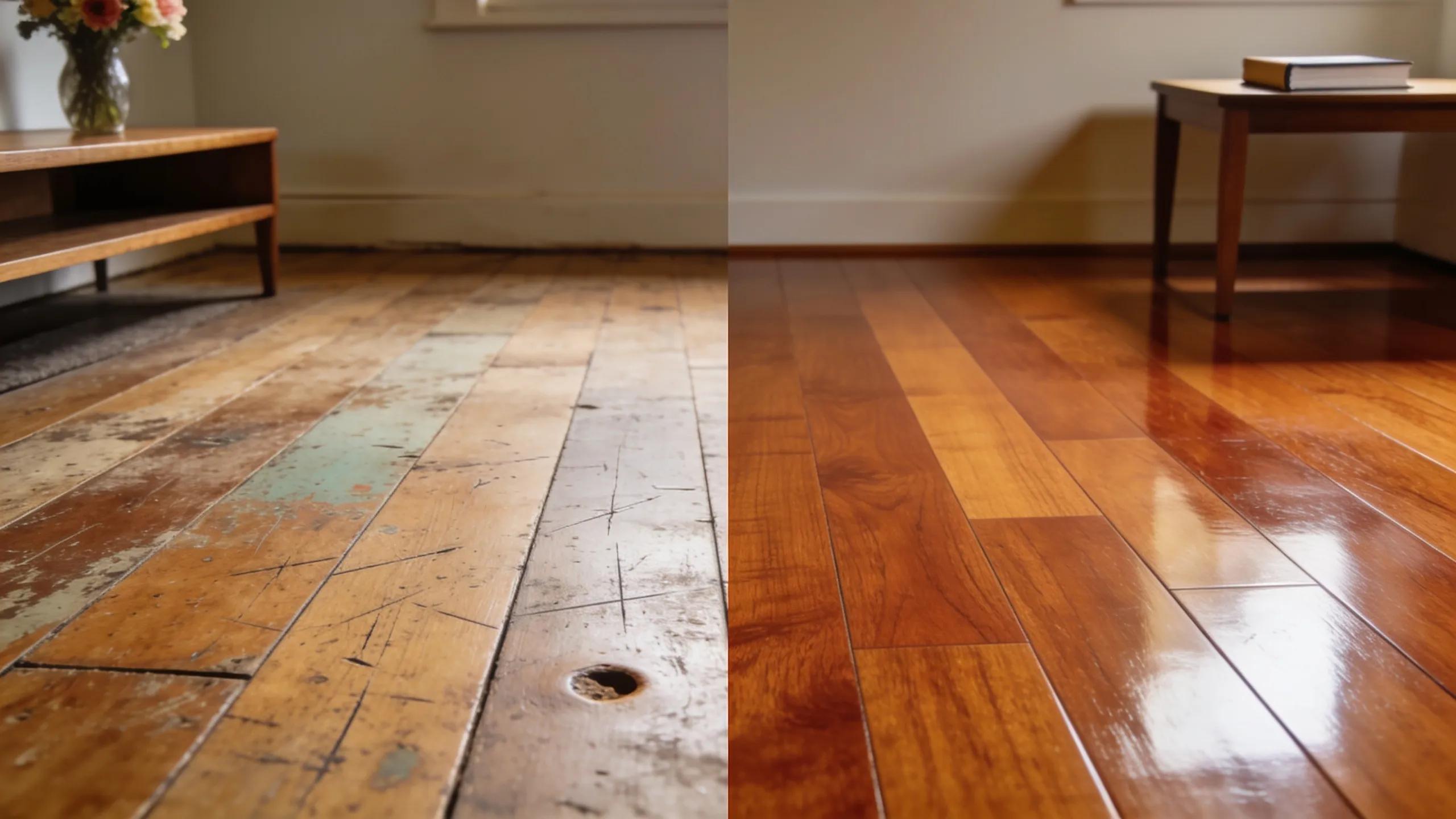
Best Hardwood Flooring for Homes: A Comparison Guide shows carpet falls short. Carpet shows dirt and grime far more visibly than a hardwood surface. It wears out faster under regular foot traffic. Hardwood, properly finished, resists staining and keeps its appearance for many years.
Is carpet a good choice for kitchens and bathrooms?
Generally, no. These rooms see constant spills and water exposure, conditions carpet handles poorly. Hardwood floors manage moisture with far less risk of staining, warping, or hidden damage underneath.
Still, carpet isn’t going away anytime soon. Its coziness and lower upfront price keep it popular — carpet accounts for more than half of all flooring material sold across the industry. That popularity reflects comfort preferences, not durability.
| Daily Concern | Carpet | Hardwood |
|---|---|---|
| Moisture exposure | Traps dampness, risks mold | Sheds spills, resists damage |
| Appearance over time | Shows dirt, wears quickly | Holds finish for years |
| Kitchen/bath suitability | Poor fit | Well suited |
| Upfront cost | Lower, widely purchased | Higher initial investment |
Comfort has a price, and that price often shows up later in replacement costs and hidden moisture damage.
What Makes Hardwood More Durable and Versatile?
Solid wood floors outlast carpet fibers by a wide margin because wood resists crushing, matting, and permanent staining. A hardwood flooring versus carpet comparison shows carpet fibers flatten and degrade under regular foot traffic. Wood planks hold their structure and finish far longer. That durability gap becomes the deciding factor for many homeowners weighing a renovation.
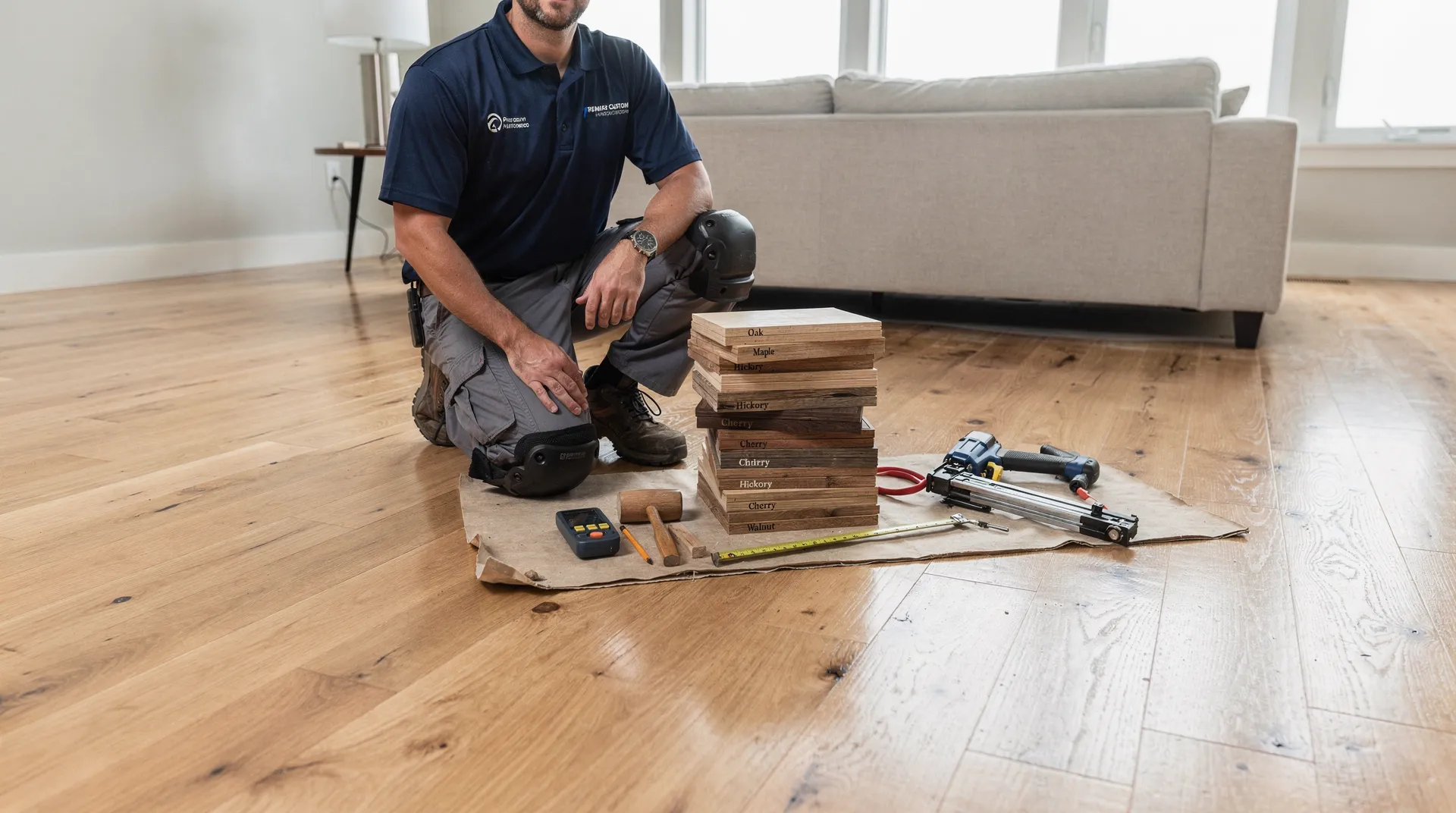
Species selection plays a major role in long-term performance. Premier Custom Hardwood Flooring installs Oak, Maple, Hickory, Cherry, Walnut, and a range of exotic woods, each offering different hardness levels. Grain patterns suited to high-traffic rooms or design-focused spaces. Carpet simply doesn’t offer this range of durable, design-forward material options.
Why does installation quality affect how long a hardwood floor lasts?
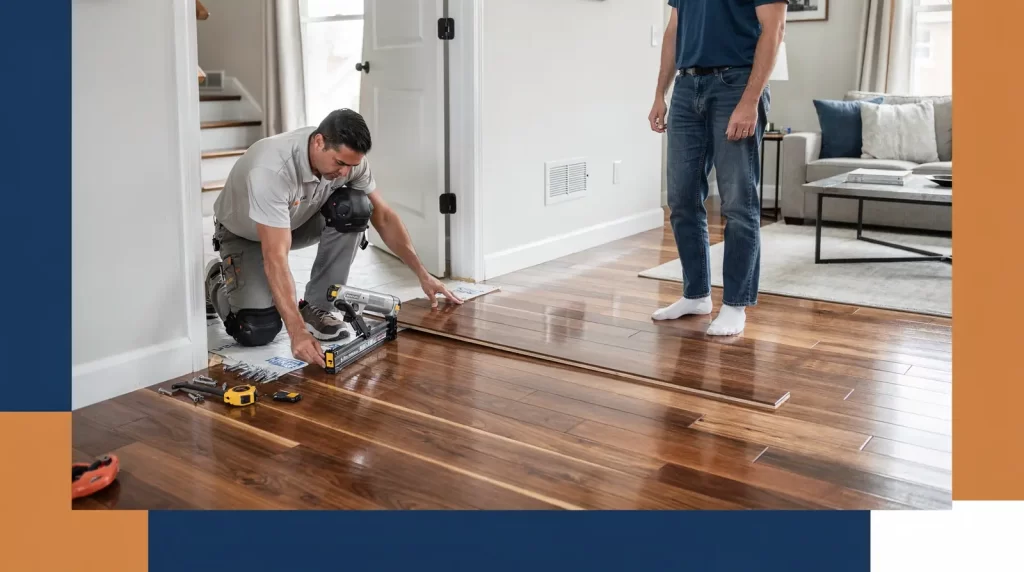
Craftsmanship determines whether a floor holds up for decades or fails within a few years. Every project starts with proper demolition and subfloor preparation, followed by a vapor barrier to block moisture from beneath the surface. Fasteners get placed at approved spacing, and cuts around casings and jambs are made with precision rather than left rough.
Can a new hardwood section match floors already in the home?
Yes. Discontinued styles and older wood species can be matched. A renovated room blends seamlessly with existing flooring elsewhere in the house. This matters for partial remodels, additions, or repairs where ripping out an entire floor isn’t practical or affordable.
| Feature | Hardwood | Carpet |
|---|---|---|
| Wears down over time | Resists degrading | Flattens and mats |
| Species/style options | Oak, Maple, Hickory, Cherry, Walnut, exotics | Limited to fiber/color choices |
| Matches existing flooring | Yes, including discontinued styles | Not applicable |
| Installation prep | Vapor barrier, proper fasteners, precision cuts | Padding and tack strips |
Carpet may feel soft underfoot on day one, but hardwood keeps performing long after carpet fibers give out.
How Does Hardwood Improve Indoor Air Quality?
Hardwood floors keep the air inside a home cleaner because they don’t hold onto dust, dander, or chemical residue the way carpet fibers do. Carpet acts like a filter that never gets emptied, trapping particles deep in its fibers where vacuuming rarely reaches. A hardwood flooring vs carpet comparison on air quality alone often settles the debate for allergy-prone households.
Finishing products matter just as much as the wood itself. Premier Custom Hardwood Flooring applies [**How To Choose Between Different Hardwood Flooring Types**]-recommended GREENGUARD-certified waterborne finishes, which undergo independent testing to meet strict limits on chemical emissions. Carpet, by contrast, can hold onto contaminants long after installation, releasing them slowly into living spaces.
Does refinishing hardwood create a lot of dust?
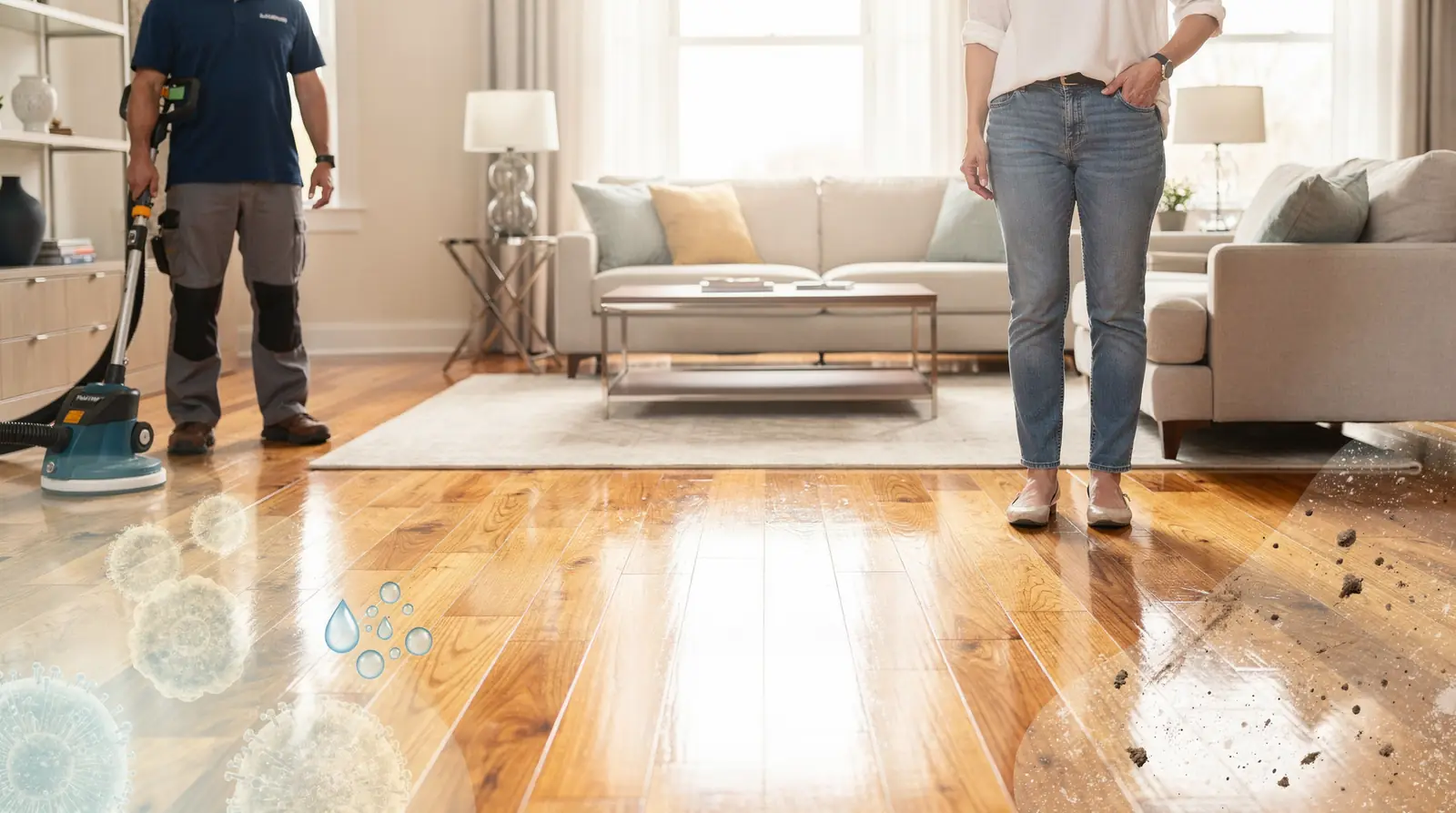
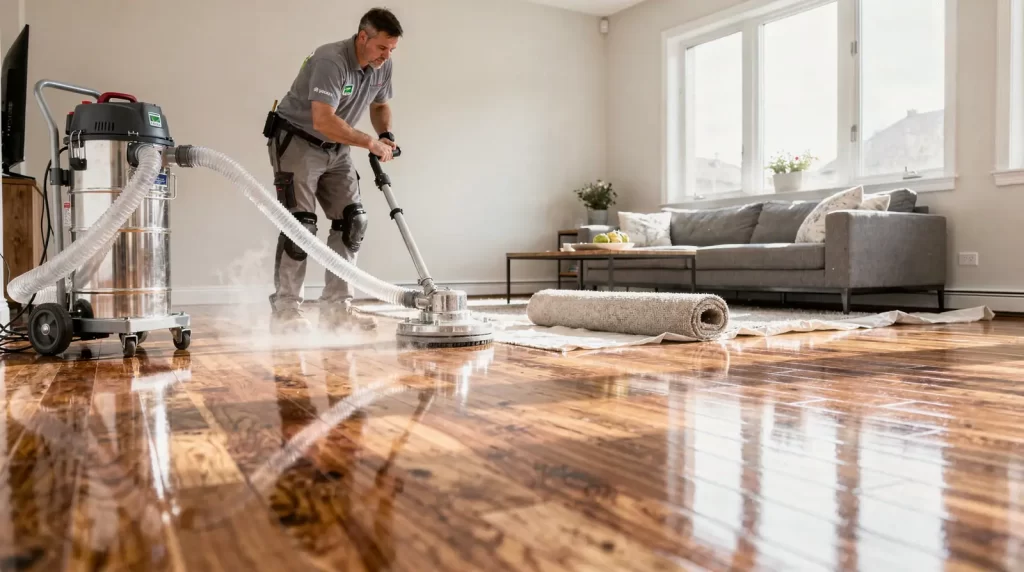
Sanding used to mean days of dust settling on every surface in the house. Premier Custom Hardwood Flooring solves that problem with a modern dust containment system that captures airborne particles at the source during sanding and refinishing. The result is noticeably cleaner air throughout the project, not just after cleanup.
Is hardwood better for allergy sufferers than carpet?
Yes. Choosing hardwood over carpet helps keep allergens to a minimum throughout the home. Smooth flooring doesn’t trap pollen, pet hair, or dust mites the way carpet fibers do.
As a Bona Certified Craftsman, the installation crew brings added discipline to every job. That certification emphasizes clean, safe, and durable results while minimizing disruption inside occupied homes and businesses. Homeowners get more than a finished floor — they get a healthier space to breathe in:
- Independently tested finishes with documented emission limits
- Active dust capture during sanding, not just cleanup after
- Certified techniques that reduce mess and airborne particles from the start
Together, these practices give hardwood a real edge over carpet when indoor air quality is the priority.
How Does Premier Make Switching to Hardwood Easy?
Four elements remove the guesswork from a carpet-to-hardwood conversion: a structured process, flexible scheduling, certified craftsmanship, and optional interior painting. Homeowners weighing a hardwood flooring vs carpet comparison often stall not because they doubt the benefits, but because they fear a messy, unpredictable project. Premier Custom Hardwood Flooring addresses that fear at every stage.
What happens during the first visit?
The process opens with a free in-home consultation and precise measurements. Scheduling gets confirmed up front. Completion dates are set and honored, so homeowners know exactly what to expect before any tools come out.
Convenience extends into daily operations. The company keeps hours Monday through Saturday, 7 a.m. to 7 p.m., fitting around work and family routines rather than forcing homeowners to rearrange their week. Free estimates come standard, and payment flexibility includes check, cash, credit card, and debit options.
Does certification actually change the outcome?
Yes — certification shapes how the crew works, not just what they know. As a Bona Certified Craftsman, the team follows the process outlined in Hardwood Flooring Installation for a Stunning Home, which limits disruption in occupied homes. That commitment also covers best-of-class floor care. Maintenance guidance for the lifetime of the floors, long after installation wraps up.
Many remodels involve more than flooring. To round out a project, Premier offers these additional services:
- Full-service interior painting, from prep through cleanup
- Consistent craftsmanship standards applied across paint and flooring work
- One point of contact for combined projects, reducing coordination headaches
That combination — clear scheduling, certified methods, and painting support. Gives homeowners a simpler, less stressful path away from carpet.
Hardwood flooring represents a lasting investment in your home’s beauty, durability, and indoor air quality. Unlike carpet, hardwood withstands daily wear while maintaining its elegance across many years. Whether you’re updating a single room or refinishing your entire home, the timeless appeal. Practical benefits of hardwood make it the superior choice for homeowners seeking both aesthetic refinement and long-term value. Our seasoned team stands ready to bring that enduring quality to your space.
Conclusion
For homeowners weighing hardwood flooring against carpet, the comparison comes down to durability, indoor air quality, and long-term value. Hardwood holds its finish for years, resists moisture and daily wear, and keeps allergens out of the air, while carpet stays softer underfoot but shows dirt sooner, traps dampness, and typically needs replacing every 5-10 years. The choice, in the end, is between short-term comfort and lasting performance that pays off in resale value and years of use. Premier Custom Hardwood Flooring’s team is ready to walk homeowners through that decision and what a hardwood conversion would look like for their space.
FAQ
Does hardwood flooring last longer than carpet?
Yes. Hardwood can last 20-30 years or more when properly maintained. Carpet typically needs replacement every 5-10 years and shows dirt and grime far more visibly under regular foot traffic.
Why does carpet pose a moisture risk that hardwood avoids?
Carpet traps dampness deep in its fibers, creating conditions for mold and mildew, a risk that climbs during humid Chicago-area summers. Hardwood resists this everyday failure point that carpet cannot.
Is requesting a free estimate helpful before choosing between hardwood and carpet?
Yes. A free estimate provides pricing clarity, letting homeowners compare hardwood against carpet costs honestly without overpaying or guessing at numbers.