Professional hardwood flooring installation delivers stronger long-term performance than DIY for most North West Suburbs homeowners. Proper subfloor prep, fastener spacing, and finishing require specialized tools and training. Premier Custom Hardwood Flooring, a Bona Certified Craftsman with over 40 years of experience, uses GREENGUARD-certified waterborne finishes and dust containment systems that DIY attempts typically cannot replicate, protecting the investment.
Key Takeaways
DIY installation risks costly mistakes; professionals complete projects faster with proven techniques and proper equipment.
Premier Custom Hardwood Flooring’s 99.8% dust containment system keeps homes cleaner than typical DIY approaches.
Professional installers match discontinued flooring styles and handle complex trim work that DIYers struggle to execute.
Bona Certified craftsmen deliver 40+ years of expertise, ensuring durable results backed by warranty protection.
Is DIY Hardwood Installation Worth the Risk?
Short-term savings rarely outweigh long-term costs. Skipping professional labor cuts the upfront bill, since homeowners avoid paying for installation labor entirely. But that early win can unravel fast once the planks go down and the mistakes start showing.
Cutting corners on subfloor prep or a rushed measurement often surfaces weeks or months later. Installation mistakes lead to warped boards, gaps, and squeaks that only get worse with time. Fixing these problems typically costs more than hiring an experienced crew from the start would have.
What Goes Wrong Most Often in DIY Installations?
Errors during installation compromise three things at once: appearance, functionality, and lifespan. A misaligned seam or improperly nailed board might look fine on day one. Months later, that same flaw can cause buckling, uneven wear, or a finish that ages unevenly across the room.
Why Does Subfloor Prep Matter So Much?
Risk in a flooring project builds from the ground up, starting with subfloor prep and ending with precision cuts around trim and doorways. Every step in between carries a chance for costly error. Common DIY risk points include:
Inadequate subfloor leveling or moisture checks
Incorrect fastener spacing or type
Imprecise cuts around jambs, casings, and transitions
Missing or improperly installed vapor barriers
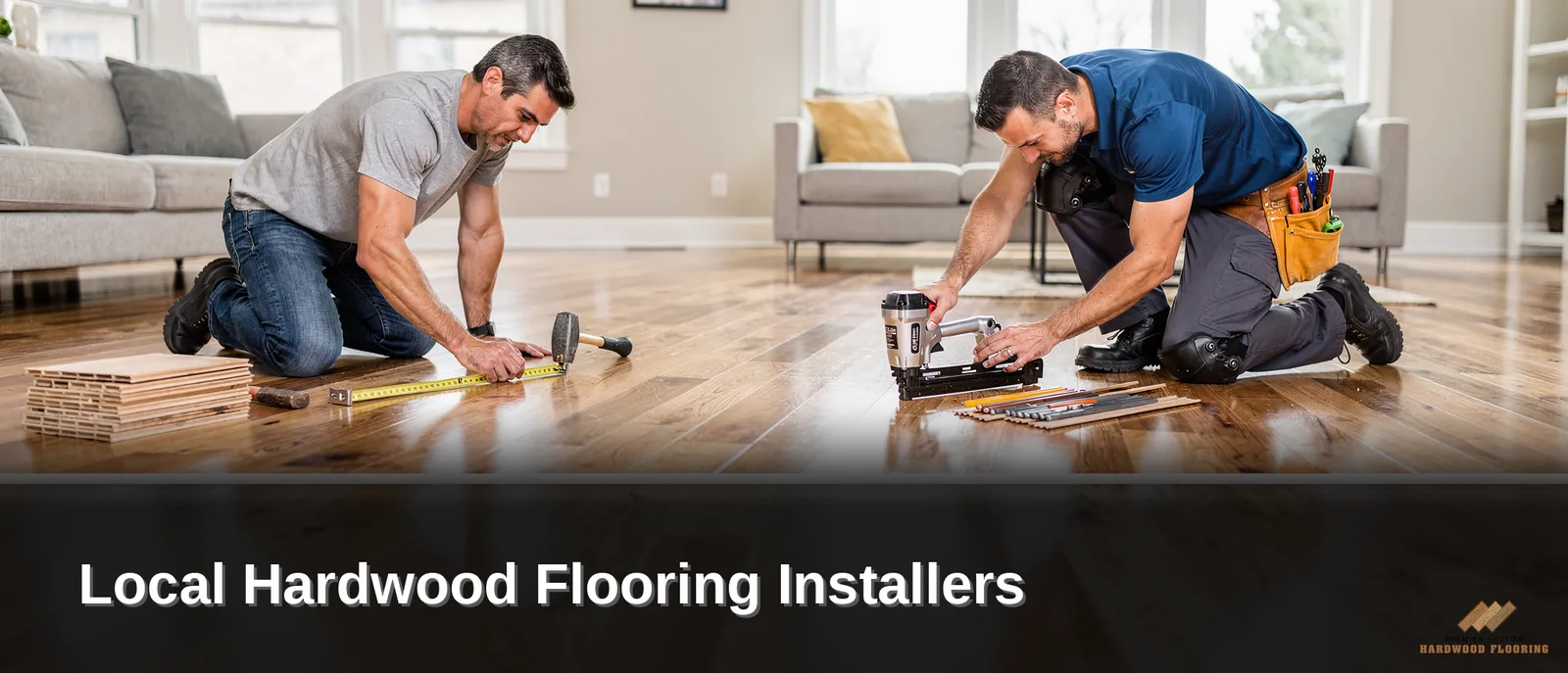
Local hardwood flooring installers bring the training and equipment to manage each of these steps correctly the first time. For homeowners in the North West Suburbs weighing a weekend project against a lasting investment, that difference matters more than the initial price tag suggests.
What Does Professional Installation Actually Include?
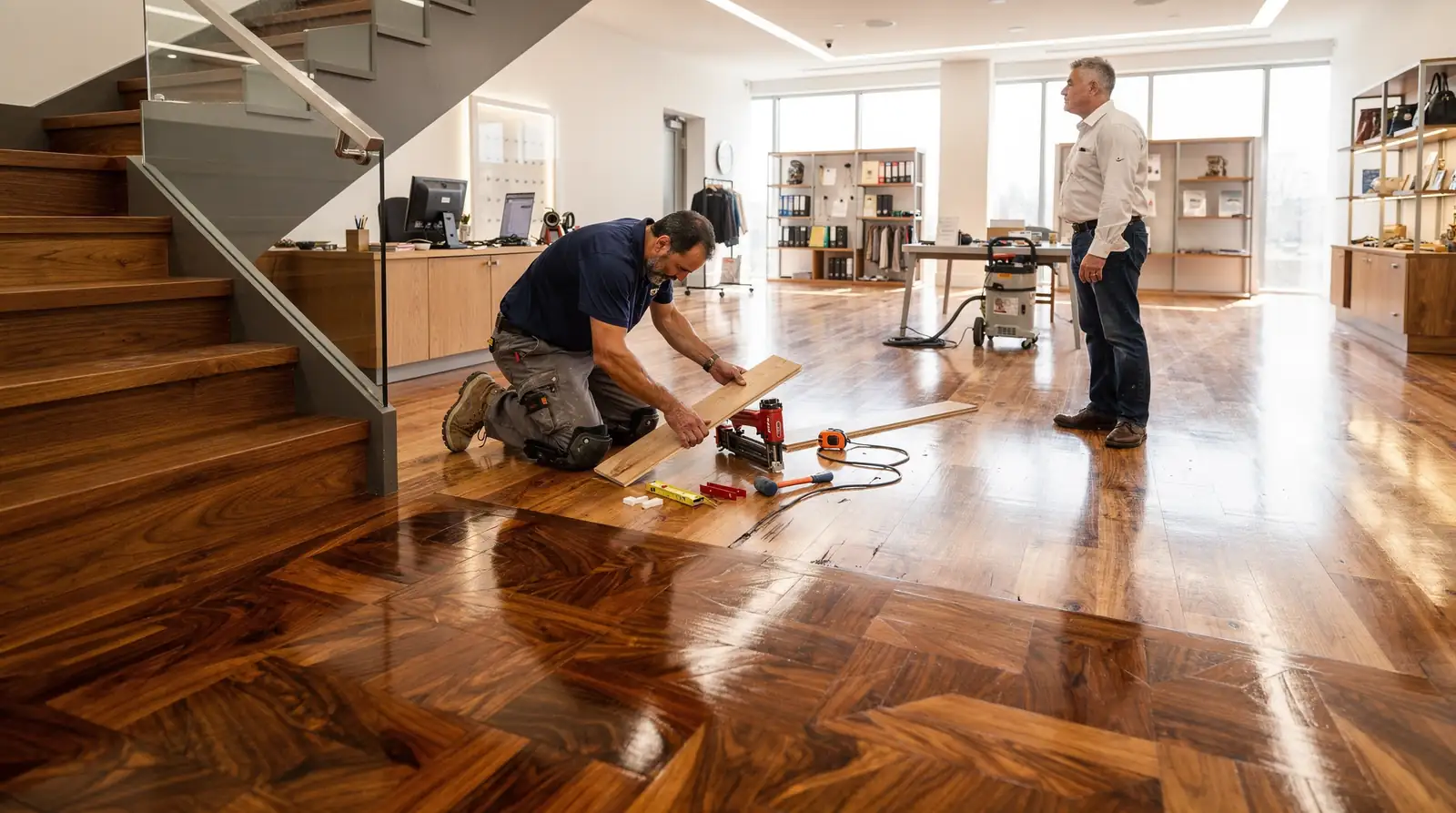
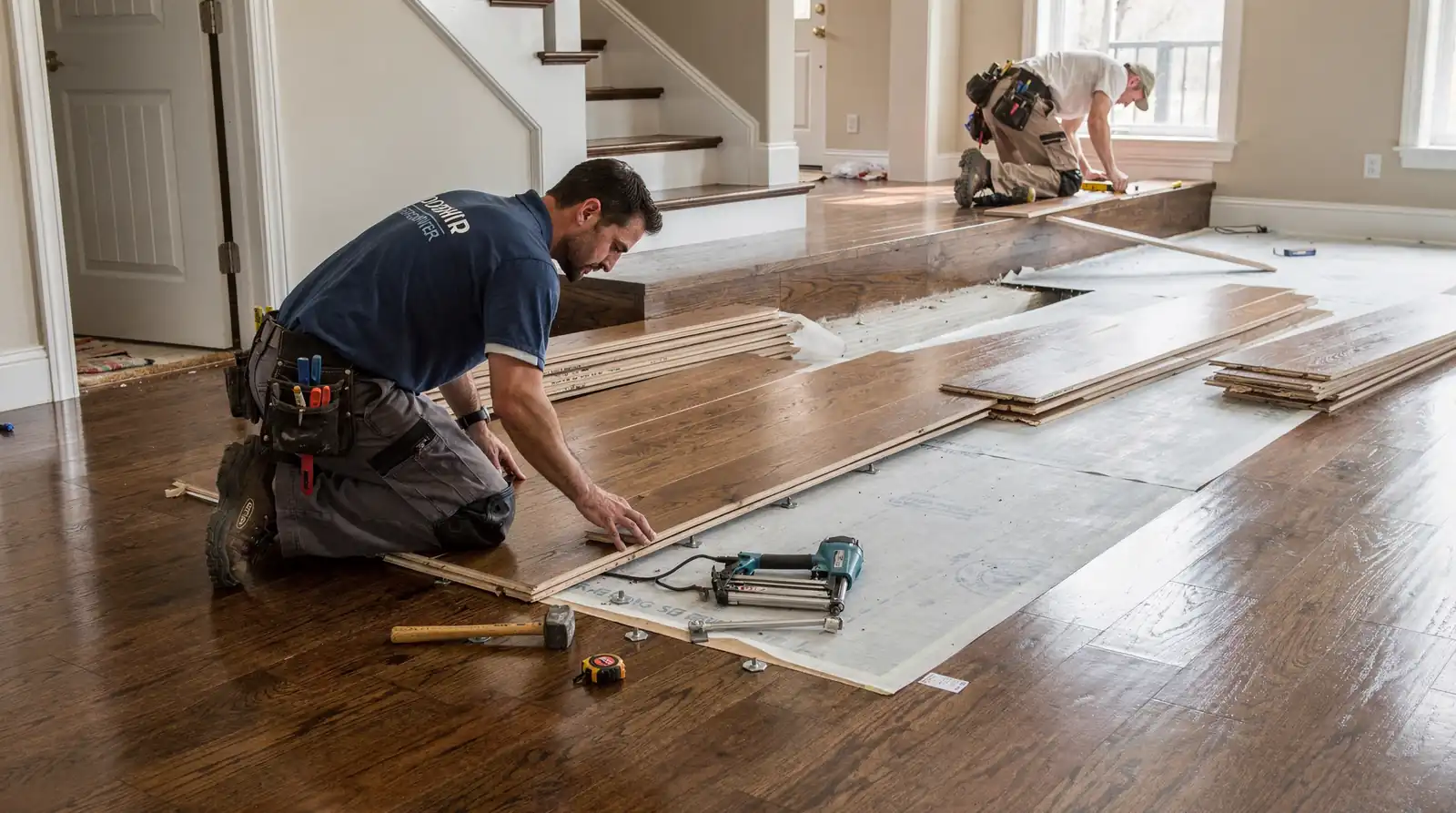
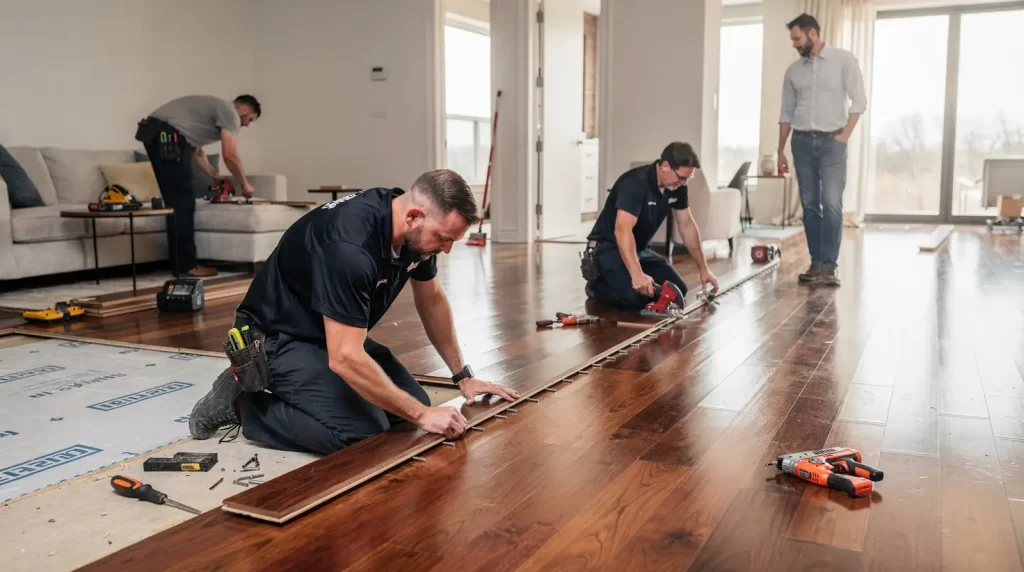
Professional installation covers far more than laying planks in a row. A qualified crew handles demolition and subfloor preparation, installs a vapor barrier, sets fasteners at proper spacing, and cuts precisely around door casings and jambs. Skip any one of these steps, and homeowners risk squeaky boards, moisture damage, or gaps that show up months later.
Local hardwood flooring installers who follow a structured process protect that investment from the first phone call to the final walkthrough. Premier Custom Hardwood Flooring builds every project around four stages: consultation, pre-installation, installation, and post-installation. This sequence keeps surprises off the job site and gives homeowners a clear picture of what happens next.
Does professional installation work in occupied homes, not just new builds?
Yes. Full-service hardwood solutions apply to both residential and commercial properties, whether the space is new construction or a home someone already lives in. That matters for North West Suburbs homeowners who can’t simply vacate the house for two weeks while work gets done. Crews trained for occupied spaces know how to sequence rooms, manage dust, and keep daily life moving.
What happens to furniture during installation?
Furniture doesn’t stay in the room during work. Crews move pieces out before installation begins, wrap them in protective plastic, and return everything to its original place once the job wraps up.
A typical scope of work looks like this:
Demolition and removal of old flooring materials
Subfloor inspection and vapor barrier installation
Fastener placement at manufacturer-approved spacing
Precision trim cuts around casings and jambs
Furniture removal, protection, and replacement
Each stage protects the next. Rushing prep work undermines even the highest-grade hardwood, which is why sequence and discipline matter as much as material choice.
Why Does Experience Matter for Flooring Results?
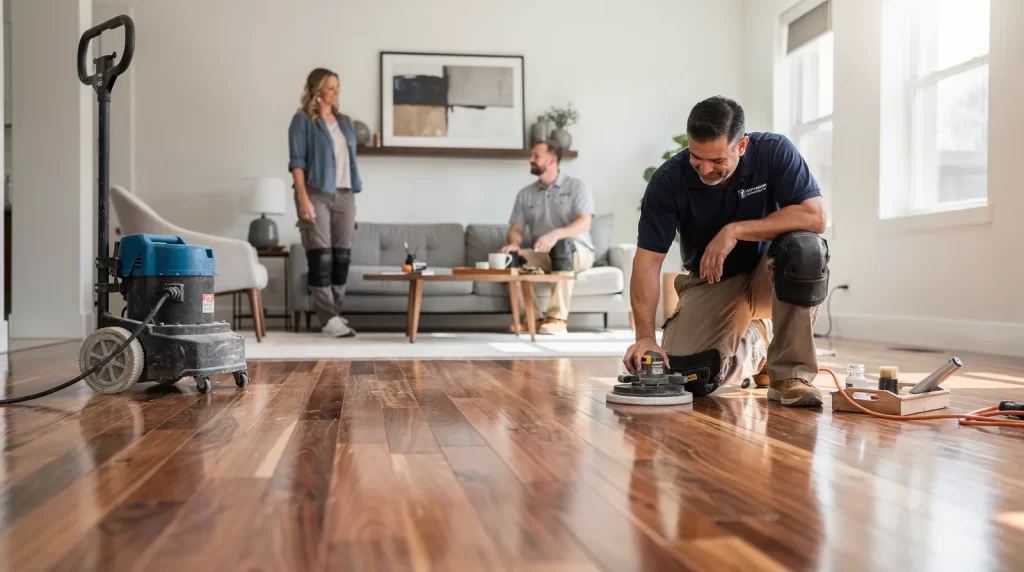
Experience separates a floor that lasts decades from one that shows problems within a year. Premier Custom Hardwood Flooring brings more than 40 years of veteran-owned experience to every job across the North West Suburbs of Chicago. That track record shapes how planks get cut, fastened, and finished long before the first board touches the subfloor.
Skill shows most clearly in the details a homeowner never sees but always feels underfoot. As a Bona Certified craftsman team, installers follow training standards built for clean, safe, and durable results. Disruption to the household stays minimal, since the crew plans each step instead of improvising on site.
Do experienced installers really prevent costly mistakes?
Yes. A seasoned crew catches subfloor issues, moisture problems, and layout errors before they become permanent. Professional installers bring years of hands-on experience, avoiding the uneven seams and mismatched cuts that can turn a DIY attempt into an expensive redo.
What else does decades of experience provide?
Long-tenured local hardwood flooring installers offer more than careful installation. Crews at Premier Custom Hardwood Flooring are trained to be:
Friendly and respectful of the home during every visit
Skilled at matching discontinued or hard-to-find flooring styles
Consistent in blending new wood seamlessly with existing floors
Disciplined about protecting furniture and finished surfaces throughout the project
Homeowners weighing a DIY project against professional installation should consider what four decades of repetition actually buys: fewer surprises, cleaner lines, and a floor built to perform for years rather than months. Experience isn’t a marketing phrase here. It’s the difference between a floor that needs fixing and one that simply works.
How Do Finishes and Dust Control Protect You?
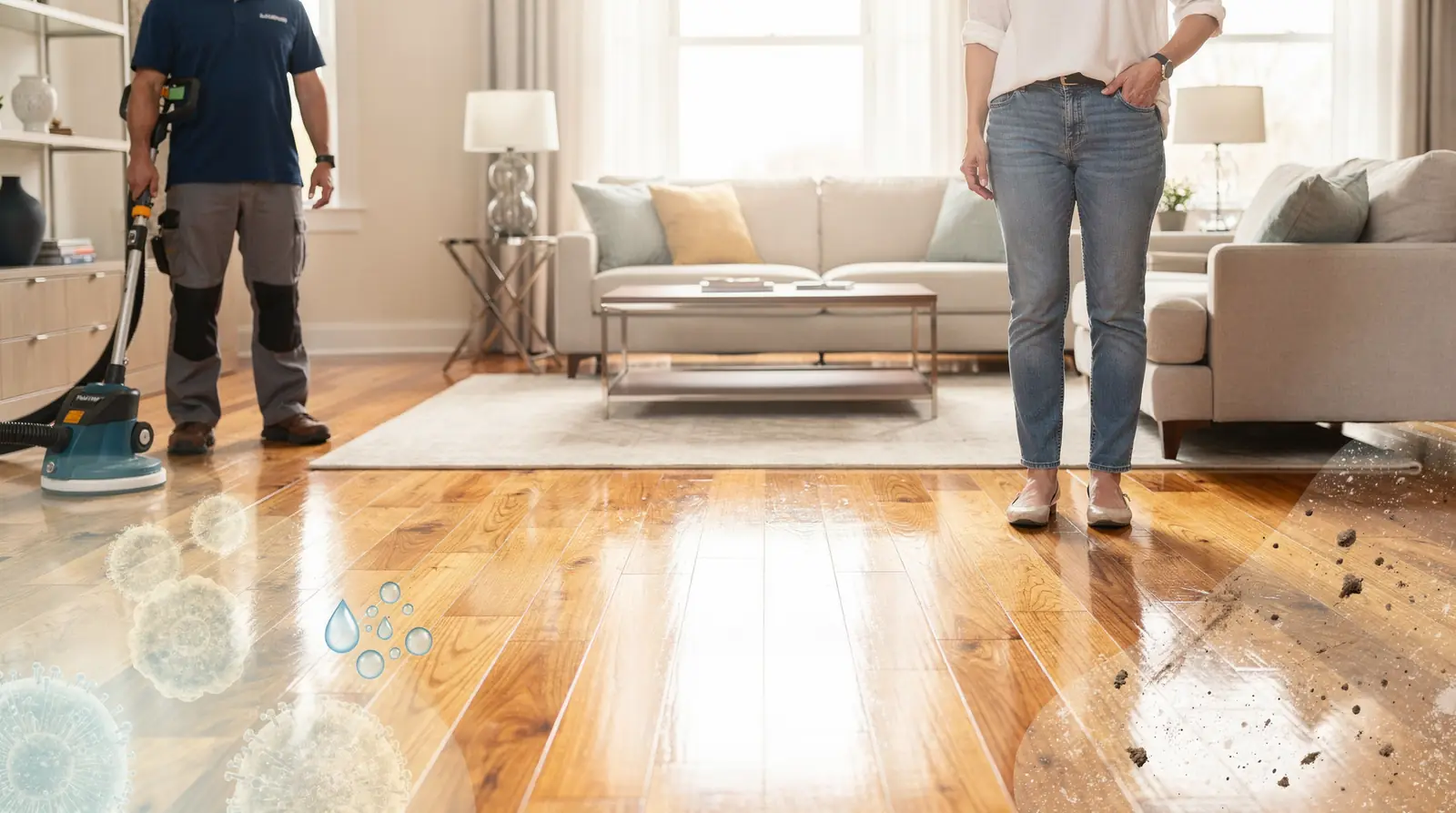
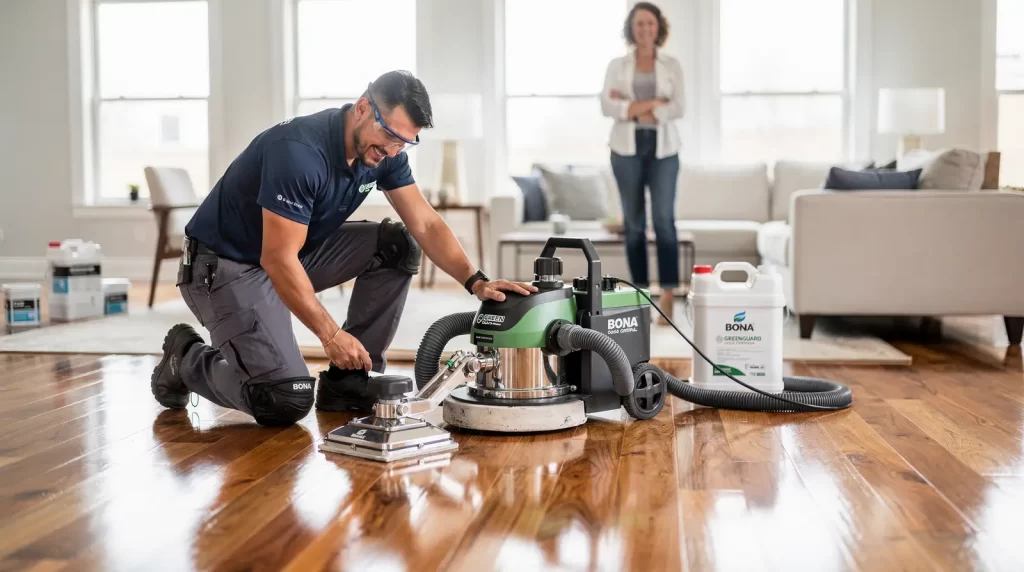
Finishes and containment systems protect indoor air, furniture, and lungs during a hardwood project. Sanding an old floor without proper controls can send fine wood dust into every room, settling on countertops, bedding, and air ducts for weeks afterward. Premier Custom Hardwood Flooring eliminates that risk with GREENGUARD-certified waterborne finishes paired with a dust containment system rated at 99.8% capture. That combination keeps homes cleaner, safer, and speeds up project timelines for families still living on-site.
Homeowners comparing local hardwood flooring installers should ask directly about dust management and finish chemistry before signing a contract. Not every crew invests in professional-grade containment equipment, and cutting corners here shows up later as dusty vents and lingering fumes.
Why does the finish type matter for indoor air quality?
Waterborne finishes release far fewer harmful fumes than older oil-based products, which matters for households with children, pets, or allergy sufferers. Premier Custom Hardwood Flooring’s dustless process relies on BONA GREENGUARD Gold Certified products and techniques specifically to safeguard air quality throughout the job.
What should homeowners check before hiring an installer?
A short checklist helps separate careful contractors from shortcuts:
Confirmation of GREENGUARD-certified finish products
A stated dust containment method, not just a shop vac
Proof of licensing and insurance coverage
Use of best-in-class materials rather than budget substitutes
Premier Custom Hardwood Flooring meets each of those standards as a licensed, insured contractor built on more than 40 years of disciplined craftsmanship. That track record gives homeowners a measurable, verifiable reason to trust the finished floor and the air they breathe while it’s installed.
How Do You Choose Local Hardwood Flooring Installers?
Selection comes down to track record, transparency, and how a company treats a home before work even starts. Local hardwood flooring installers who begin with a free in-home consultation. Precise measurements demonstrate a commitment to accuracy before a single board gets cut. Homeowners in the North West Suburbs of Chicago should treat that first visit as a screening tool, not just a formality.
A veteran-owned contractor with more than four decades in the trade brings a different level of discipline to the job site. Craftsmanship built over that many years shows up in details most homeowners never think to check until something goes wrong.
What should a homeowner ask before hiring a flooring contractor?
Ask about scheduling flexibility and service hours first. A company operating Monday through Saturday from 7 a.m. to 7 p.m., offering free estimates and multiple payment options, signals a business structured around client convenience rather than its own. Payment flexibility also matters for households budgeting a larger renovation.
Does the installer's project range matter?
Yes. A firm serving homeowners, builders, and business owners across single rooms and whole-home installations has likely handled a wider variety of subfloor conditions, wood species, and layout challenges. That breadth reduces surprises mid-project.
Before signing a contract, homeowners should confirm:
A free consultation and written measurements are included
Business hours align with the household’s schedule
The company has handled projects similar in scope to theirs
Customer service and satisfaction are stated priorities, not afterthoughts
A contractor whose mission centers on becoming the most trusted installer in the industry tends to back that claim with responsive communication long after installation day ends.
FAQ
Is DIY hardwood installation cheaper than hiring a professional?
DIY cuts upfront labor costs. Mistakes in subfloor prep or measurement often surface later as warped boards, gaps, or squeaks. Fixing these issues typically costs more than hiring an experienced crew from the start.
What does professional hardwood installation include?
Premier Custom Hardwood Flooring handles demolition, subfloor prep, vapor barrier installation, proper fastener spacing, and precise cuts around jambs and casings. The process follows four stages: consultation, pre-installation, installation, and post-installation.
What are the most common DIY installation mistakes?
Common risk points include inadequate subfloor leveling, incorrect fastener spacing, imprecise cuts around trim, and missing vapor barriers. These errors compromise appearance, functionality, and the flooring’s lifespan.
Conclusion
In closing, while DIY hardwood flooring installation may seem cost-effective initially, professional hardwood flooring installation delivers the expertise, precision, and durability that protect your investment for decades. Premier Custom Hardwood Flooring brings four decades of disciplined craftsmanship, Bona Certified methods, and modern dust containment to every project, ensuring clean, safe, and flawless results. Our veteran-led team handles the complexities—from vapor barriers to finish application—so you enjoy beautiful hardwood floors without the risk, disruption, or regret that often accompanies amateur work.